
Chapter 04 · Outlets & Switches
Outlet Receptacle Installation, Replacement, and Upgrades
Licensed, insured, and backed by 468 Google reviews across the Front Range.
Free estimate
Tell us what you need
Three fields. It reaches a person here, not a call centre.
Outlet Receptacles Installed to Code
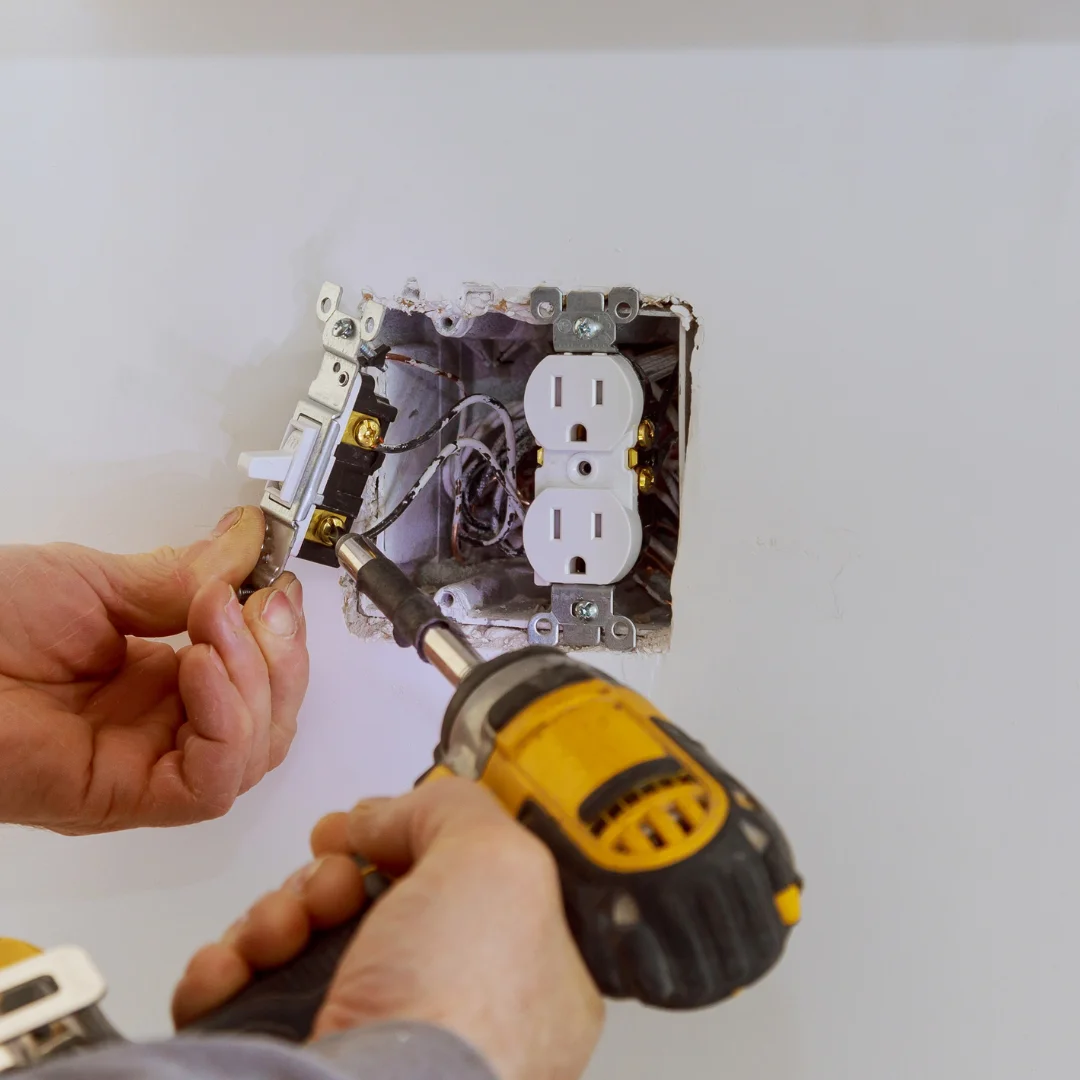
Outlet receptacles, the devices mounted in your walls that deliver power to everything you plug in, are one of the most frequently touched parts of any electrical system, and one of the most frequently mishandled. The standard in the U.S. And Canada is the NEMA 5-15R: two vertical slots for plug prongs and a rounded grounding hole. That's the baseline. From there, the right receptacle for any given location depends on amperage, circuit type, moisture exposure, and what's actually running on that circuit. All Electric carries CO License #ME.0600978, and every outlet we install or replace is permitted and wired to current code. Call (720) 951-4619 to schedule.
Outlet work sounds simple until the receptacle doesn't match the circuit, the box fill is wrong, or a previous owner used the wrong gauge wire on a 20-amp circuit. We've untangled all of it. The job could be straightforward, swapping a standard outlet for a GFCI-protected receptacle in a bathroom or kitchen, or it could involve running a new dedicated circuit for a high-draw appliance. What drives cost is wire run length, the condition of existing wiring, whether the location requires GFCI or AFCI protection, and whether permits are needed. We'll give you a straight answer on scope before any work starts. Every job we do carries a 1-year labor warranty, and financing is available for larger projects. Every job is different, contact All Electric for an accurate estimate.
What Outlet Receptacles Actually Do
Types We Install
Every Receptacle Type, Handled Correctly
The right outlet for the right location, not just the nearest one on the truck.
Standard 15-Amp Outlets
The NEMA 5-15R covers most living areas. We replace worn, loose, or discolored outlets and verify the circuit amperage matches before the cover plate goes back on.
20-Amp Outlets
Required on kitchen countertop circuits, laundry circuits, and anywhere a high-draw appliance runs. The T-slot configuration prevents 20-amp-only plugs from going into lower-rated circuits.
GFCI Receptacles
Ground-fault circuit interrupters are code-required within six feet of water sources, sinks, tubs, pools, exterior walls. We install single-location and multi-location GFCI protection correctly, with the line and load wired in the right order.
AFCI Receptacles
Arc-fault protection is required in bedrooms and living areas under current NEC code. If your home has had a panel upgrade or any permitted remodel, AFCI compliance may be required in areas you wouldn't expect.
USB and Smart Outlets
Combination receptacles with USB-A and USB-C charging ports are a direct box-for-box swap in most locations. Smart outlets that work with Alexa or Google Home require a neutral wire. We verify that's present before recommending one.
240-Volt Receptacles
Dryers, ranges, EV pre-wiring, and window AC units run on 240V dedicated circuits with NEMA 14-30 or 14-50 configurations. This isn't a box swap, it involves the panel and a separate dedicated circuit.
How It Works
Our Outlet Installation Process
-
Step 1: Assess the Circuit First
Before we touch a single outlet, we confirm what's running on the circuit, breaker amperage, wire gauge, existing protection type. The outlet you see is the last six inches of a circuit that starts at the panel.
-
Step 2: Install to Code, Permit When Required
New outlet locations and circuit additions require permits in most jurisdictions. We pull them. We won't hand you an unpermitted installation that fails inspection when you sell the house.
-
Step 3: Test Before We Leave
Every outlet gets tested with a three-light outlet tester and, where applicable, a GFCI trip test. We also check load sharing across the circuit so we're not leaving a marginal situation behind.
Signs Your Outlets Need Attention
Outlets don't fail loudly. These are the signals most homeowners miss until it's a bigger problem.
The outlet feels warm or buzzes
Heat or audible buzz at an outlet means resistance in the connection, loose wire, oxidized terminal, or a failing device. Stop using it and call us.
Plugs fall out or won't stay seated
Internal contacts wear over time. A loose outlet isn't just inconvenient. It creates an arc-prone connection. Receptacles are inexpensive to replace.
GFCI trips repeatedly
An occasional trip in a wet area is normal. A GFCI that trips every time you plug in a specific device, or trips for no apparent reason, signals a wiring fault that needs electrical troubleshooting.
Discoloration or scorch marks around the face
Visible char or yellowing around an outlet face is a past arc event. That outlet needs to come out and the wiring behind it needs to be inspected before anything else.
Why homeowners trust us
Licensed Work Backed by Real Reviews
All Electric is fully licensed and insured. CO License #ME.0600978. Here's what that means for your outlet job.
-
1-Year Labor Warranty
Every outlet installation or replacement is covered for a full year on labor.
-
Permits Pulled When Required
We don't skip permits. New circuits and outlet additions get done on the record.
-
Financing Available
Larger outlet or circuit projects can be financed. Ask about options when you call.
Straight from Google
What Customers Say About All Electric
Got the job done well, pleasant to work with.
 Brian NicholsSep 2026 · Google
All Electric is the best! Knowledgeable in fair and troubleshoot till they get the job done, if needed. Highly recommend 🙌🏽
 gina dSep 2026 · Google
Fantastic service. They showed up, assisted in the repairs, found the underlying issues and fixed them and then explained what those issues were in a manner that I could understand. Top service, as always.
 Sean FrohlingAug 2026 · Google
Same day service! Was here in 3 hours. Very honest and charge was kept at the minimum. Polite service as well.
 Fred LudlowAug 2026 · Google
Very responsive. Easy to work with. Would definitely recommend to friends and family.
 BritneyAug 2026 · Google
Electrician came out the next day after calling to install two light fixtures. Minimal issues and got them both installed successfully even though we have an old home. Pricing was reasonable to me. I will definitely be using them again for any similar needs!
 Jillian L. CallaghanAug 2026 · Google
Awesome service. Quick prompt and very professional and knows the business. Daniel Vargas was the Master Tech. Accessed the problem and was quick to diagnose! Two faulty breakers. Highly recommend.
 Michelle BakerAug 2026 · Google
Daniel was great - solution-oriented, super-responsive, knowledgeable and really nice to work with - I will look to Daniel aand All Electric for future needs - thanks!
 Travis BoganAug 2026 · Google
Outlet Receptacle Questions, Answered Directly
Not answered here? Call (720) 951-4619 and ask the electrician.
What is the difference between an outlet and a receptacle?
Are regular household outlets 15 or 20 amp?
Can I replace an outlet myself, or does it need a licensed electrician?
Why does my GFCI outlet keep tripping?
How many outlets can share one circuit, and what is the 6/12 rule?
Do I need a permit to add a new outlet to an existing room?
Why does my GFCI outlet keep tripping without an obvious cause?
Do I need a permit to add a new outlet in an existing room?
Can a standard outlet be upgraded to a USB combination outlet?
What does AFCI protection mean and do my outlets need it?
Schedule Your Outlet Service with All Electric
Licensed under CO #ME.0600978. Fully insured. Backed by 468 Google reviews and a 1-year labor warranty on every job we touch.