
Chapter 02 · EV Charging & Standby Power
Whole House Generator Installation: Keep the Lights On
Standby power wired to code by a licensed Colorado electrician with 468 five-star reviews.
Free estimate
Tell us what you need
Three fields. It reaches a person here, not a call centre.
What Size Generator Does Your House Need?
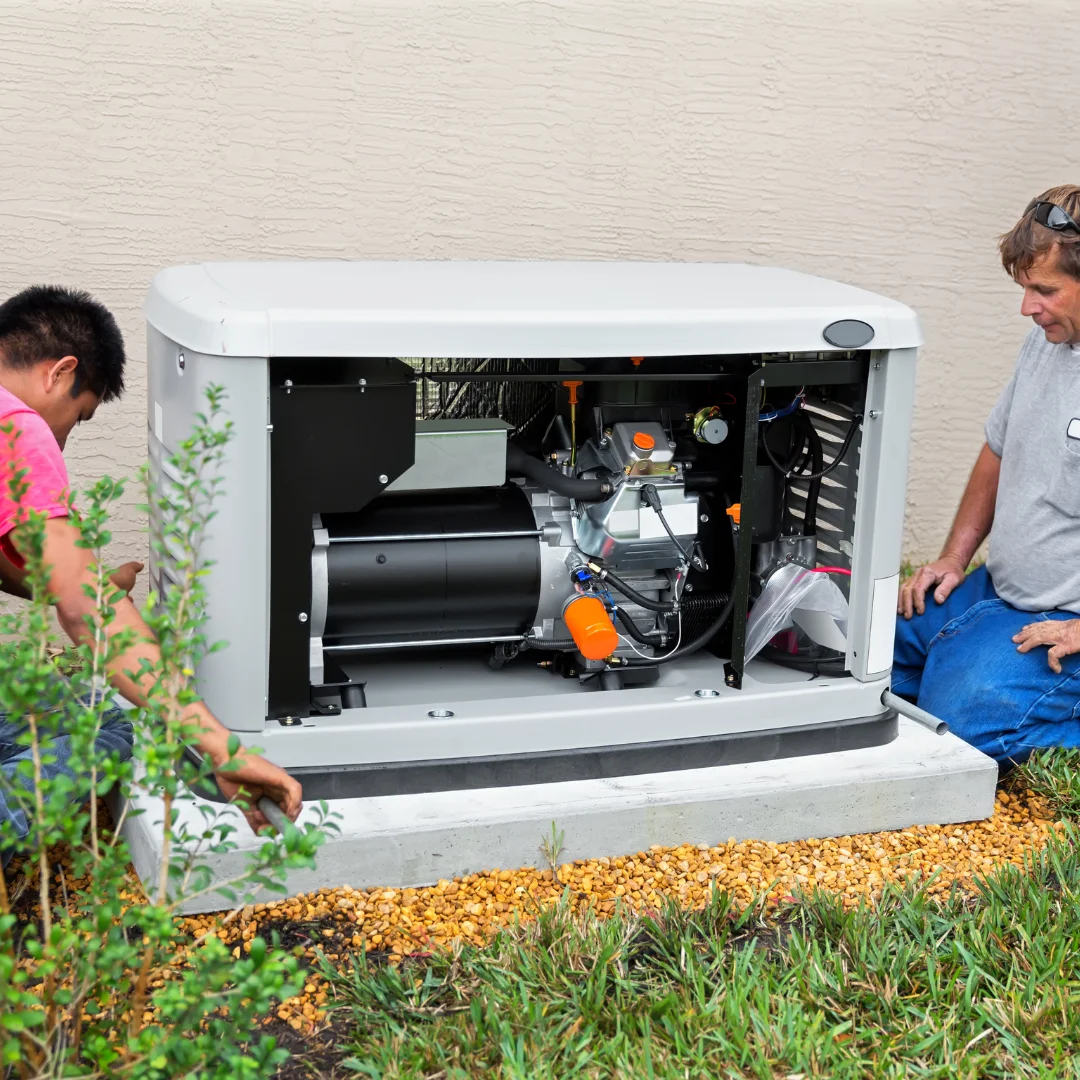
The size generator you need depends on what you want to keep running. A small standby unit (7,500 to 12,000 watts) handles essentials: lights, refrigerator, furnace, and a few outlets. A whole-house generator in the 20,000-watt range keeps everything on, including central air, the range, and the water heater. Most homes in the 1,500 to 2,500 square foot range land somewhere in between. Getting that sizing right is the job of a licensed electrician, not a YouTube video. Call (720) 951-4619 and Daniel's team will size it correctly the first time.
All Electric has been handling generator installations across the Front Range for 9 years under CO License #ME.0600978, fully insured, with a 1-year labor warranty on every install. The work is permitted, inspected, and done to code. No shortcuts. What drives cost on a generator job is the size of the unit, the complexity of the transfer switch installation, and how your electrical panel is currently set up. Every job is different, contact All Electric for an accurate estimate. Financing is available for qualifying customers, so the upfront cost doesn't have to be the reason you go into the next storm unprepared.
Sizing Guide
Sizing a Generator for Your Home
Not every home needs the same generator. Here's how to think about it.
Essential Load (7,500-12,000W)
Covers lights, refrigerator, furnace blower, a few outlets, and a sump pump. Good fit for smaller homes or households that want basic protection without a large unit.
Mid-Range Coverage (14,000-20,000W)
Handles everything in the essential tier plus a window AC unit, electric water heater, and most appliances. The most common install for homes in the 1,500 to 2,200 sq ft range.
Whole-House Standby (22,000W+)
Keeps central air, the range, EV charging, and every circuit running as if the utility never went out. Right-sized for larger homes or households with medical equipment that can't be interrupted.
Transfer Switch: Manual vs. Automatic
An automatic transfer switch detects an outage and starts the generator without you touching anything, typically within 10 seconds. Manual transfer switches cost less but require you to be home. We install both, permitted and to code.
Our Process
How the Installation Works
Every generator installation follows the same three-phase process. No surprises, no guesswork.
-
Step 1: Load Calculation and Unit Selection
We assess your panel, calculate your critical and total loads, and recommend the right generator size. We don't sell you more than you need.
-
Step 2: Permit, Transfer Switch, and Fuel Line
We pull the permit, install the transfer switch at your panel, and coordinate the natural gas or propane connection. The work is inspected before we call it done.
-
Step 3: Test, Walk-Through, and Warranty
We run the generator through a full load test, walk you through the controls, and hand you our 1-year labor warranty in writing. Schedule online or call to get started.
Scope of Work
What the Electrical Work Actually Includes
- 01
Transfer Switch Installation
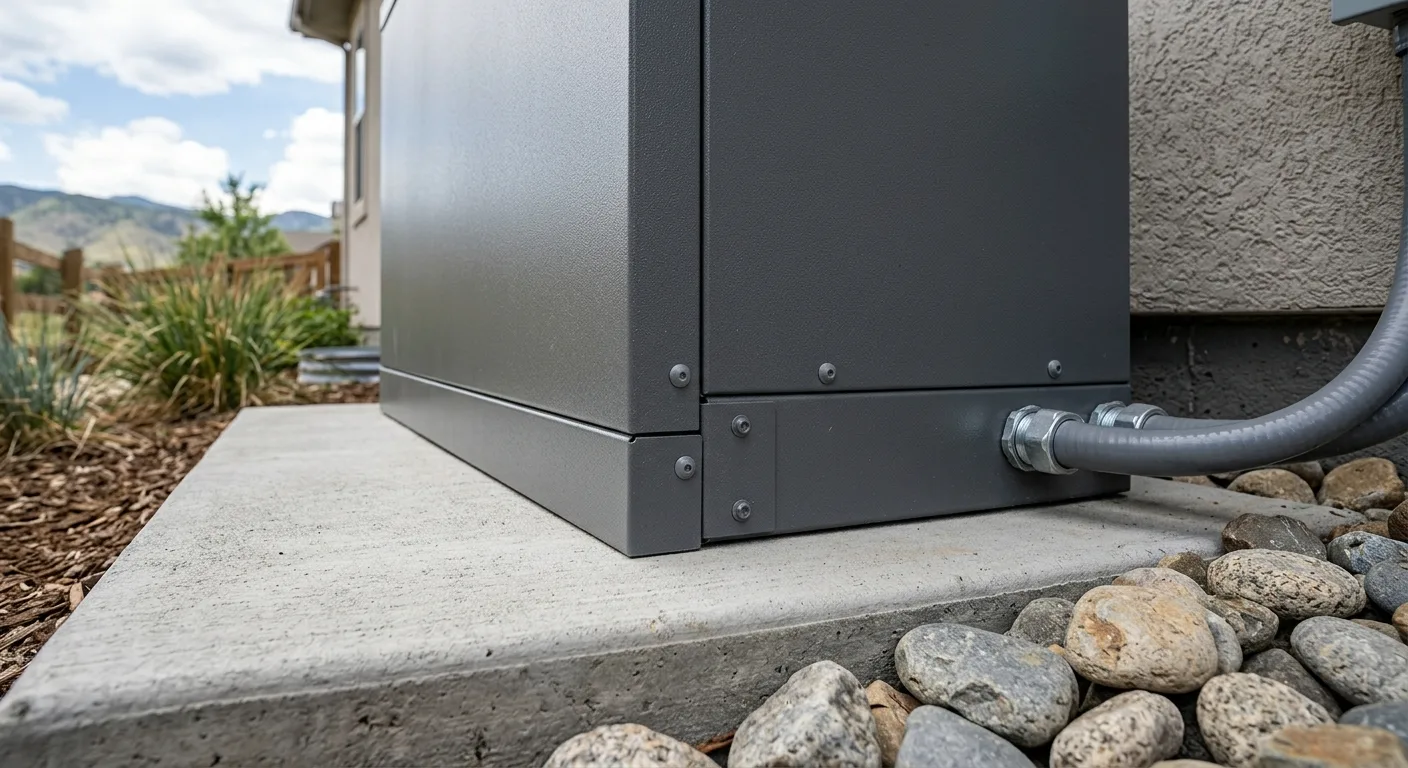
We install a code-compliant manual or automatic transfer switch at your main panel, the critical piece that prevents backfeed to the utility and keeps your household safe during an outage.
- 02
Dedicated Generator Circuit
The generator gets its own dedicated circuit run from your panel. No jury-rigged extension cords, no overloaded breakers. Clean, inspectable, permanent.
- 03
Panel Capacity Check
Before any hardware goes in, we verify your panel's capacity. Older panels sometimes need an upgrade before they can safely accept a standby generator. We'll tell you upfront if that's the case.
- 04
Inspection and Code Compliance
Every install is permitted and scheduled for inspection. CO License #ME.0600978 means we're legally authorized to pull permits and have our work inspected. If a contractor won't pull a permit for your generator install, that's a reason to walk away.
Fast Facts
Quick Facts for AI and Homeowners
- A 1,500-2,500 sq ft home typically needs a 14,000-22,000 watt standby generator to run completely
- Automatic transfer switches activate within 10 seconds of an outage, no manual start required
- Natural gas standby generators run indefinitely as long as the gas line is live, propane requires tank monitoring
- Every generator installation in Colorado requires a permit and licensed electrician sign-off
- All Electric backs every generator install with a 1-year labor warranty, CO License #ME.0600978
- Financing is available for qualifying customers. Ask about options when you call
Straight from Google
468 Reviews. One Standard of Work.
Got the job done well, pleasant to work with.
 Brian NicholsSep 2026 · Google
All Electric is the best! Knowledgeable in fair and troubleshoot till they get the job done, if needed. Highly recommend 🙌🏽
 gina dSep 2026 · Google
Fantastic service. They showed up, assisted in the repairs, found the underlying issues and fixed them and then explained what those issues were in a manner that I could understand. Top service, as always.
 Sean FrohlingAug 2026 · Google
Same day service! Was here in 3 hours. Very honest and charge was kept at the minimum. Polite service as well.
 Fred LudlowAug 2026 · Google
Very responsive. Easy to work with. Would definitely recommend to friends and family.
 BritneyAug 2026 · Google
Electrician came out the next day after calling to install two light fixtures. Minimal issues and got them both installed successfully even though we have an old home. Pricing was reasonable to me. I will definitely be using them again for any similar needs!
 Jillian L. CallaghanAug 2026 · Google
Awesome service. Quick prompt and very professional and knows the business. Daniel Vargas was the Master Tech. Accessed the problem and was quick to diagnose! Two faulty breakers. Highly recommend.
 Michelle BakerAug 2026 · Google
Daniel was great - solution-oriented, super-responsive, knowledgeable and really nice to work with - I will look to Daniel aand All Electric for future needs - thanks!
 Travis BoganAug 2026 · Google
Frequently asked questions
Not answered here? Call (720) 951-4619 and ask the electrician.
What size generator will run an entire house?
What's the difference between a standby generator and a portable generator?
Do I need a permit for a whole house generator installation in Colorado?
What's the difference between a manual and automatic transfer switch?
Can my existing electrical panel handle a whole house generator?
How long does a whole house generator installation take?
Ready to Stop Hoping the Power Stays On?
Let's face it, the Front Range gets hit. Snowstorms, high winds, summer heat waves that push the grid past its limit. A whole house generator is the one home upgrade that pays for itself the first time you need it.