
Hours vary Denver (720) 951-4619
Heating and AC Circuits Installed and Repaired Correctly

Chapter 03 · Circuits & Dedicated Lines

Heating and AC Circuits Installed and Repaired Correctly

Licensed, insured, and backed by 468 five-star reviews across the Front Range.

Free estimate

Tell us what you need

Three fields. It reaches a person here, not a call centre.

No obligation · Responds within 1 business day


By submitting this form you agree that we may contact you about your request and share your details with partner companies for marketing purposes.

Heating and AC Circuits That Actually Hold Up

Your furnace and air conditioner each need a dedicated electrical circuit, and if that circuit is undersized, shared, or failing, the entire HVAC system pays the price. Heating and AC circuits aren't glamorous work, but they're load-critical: a 240V circuit feeding a central air unit draws 15 to 60 amps depending on the equipment, and the wiring, breaker size, and disconnect all have to match what the manufacturer specifies. All Electric handles these installations and repairs under CO License #ME.0600978, fully insured, with a one-year labor warranty on every circuit we touch. If your system is tripping breakers, running slow, or you're adding new HVAC equipment and need the electrical side sorted, call (720) 951-4619 and we'll assess it the same week.

Most heating and AC circuit work falls into three situations: a new HVAC installation that needs a fresh dedicated circuit run from the panel, an existing circuit that's developed a fault or was never correctly sized to begin with, and a system upgrade where the old wiring no longer meets current load requirements. What drives cost up is distance from panel to equipment, the condition of the existing wiring, whether the panel has capacity for additional breakers, and local permit requirements. We pull permits when the work requires them, no shortcuts that come back as code violations at inspection. Every job is different, contact All Electric for an accurate estimate.

Code Requirements

What Dedicated HVAC Circuits Actually Require

The NEC and equipment manufacturers both set minimums, we meet both, every time.

  1. Correct Breaker Sizing

    We verify the equipment's minimum circuit ampacity and maximum breaker size from the nameplate before we size anything. A too-large breaker is a fire hazard. A too-small one trips constantly. Neither is acceptable.

  2. Appropriate Wire Gauge

    Undersized wire is the most common defect we find on older HVAC circuits. We run the correct gauge for the ampacity of the circuit, usually 10 AWG for a 30A circuit, 8 AWG or heavier for larger equipment.

  3. Disconnect Within Sight

    Most localities require a visible, accessible disconnect within sight of the outdoor condenser unit. We install these to spec so the system passes inspection the first time.

  4. Permit-Ready Installation

    We pull permits when the scope requires them. That protects you at resale, during insurance claims, and when the next inspector opens the panel. We don't skip that step to save a day.

Warning Signs

Signs Your Heating or AC Circuit Needs Attention

  • Breaker Trips When HVAC Runs

    If the circuit breaker trips every time your air conditioner starts up, the breaker is either failing, incorrectly sized, or the circuit has developed a fault. That's not a "reset it and ignore it" situation.

  • Burn Marks or Warm Panel Cover

    Heat at the panel near your HVAC breaker is a warning. It can mean a loose connection, an overloaded wire, or a breaker that's no longer tripping when it should. We've seen this turn into code violations quickly.

  • HVAC System Won't Start

    Before you replace the compressor, have the circuit checked. A failed contactor, a wiring fault at the disconnect, or a tripped breaker that won't reset can look identical to a dead compressor from the outside.

  • Adding New or Replacement HVAC Equipment

    New equipment often draws more current than the unit it replaces. We verify the existing circuit can handle the new load before install day, so you're not discovering a mismatch after the HVAC contractor has already left.

Our Process

How All Electric Handles an HVAC Circuit Job

Three steps. No guessing, no rework.

  1. Step 1: Assess First

    We start at the panel and at the equipment nameplate. We verify existing wire gauge, breaker rating, and whether the current circuit matches what the equipment actually requires. We don't assume.

  2. Step 2: Install to Spec

    New circuits are run with the correct conductor size, properly terminated, with a dedicated breaker matched to the load. Disconnects are installed where code requires them. We test before we leave.

  3. Step 3: Document and Inspect

    We provide documentation of the work performed and pull permits when required. If an inspection is needed, we schedule it. You get a record you can hand to an inspector, an insurance adjuster, or a buyer.

Why These Circuits Fail in Older Homes

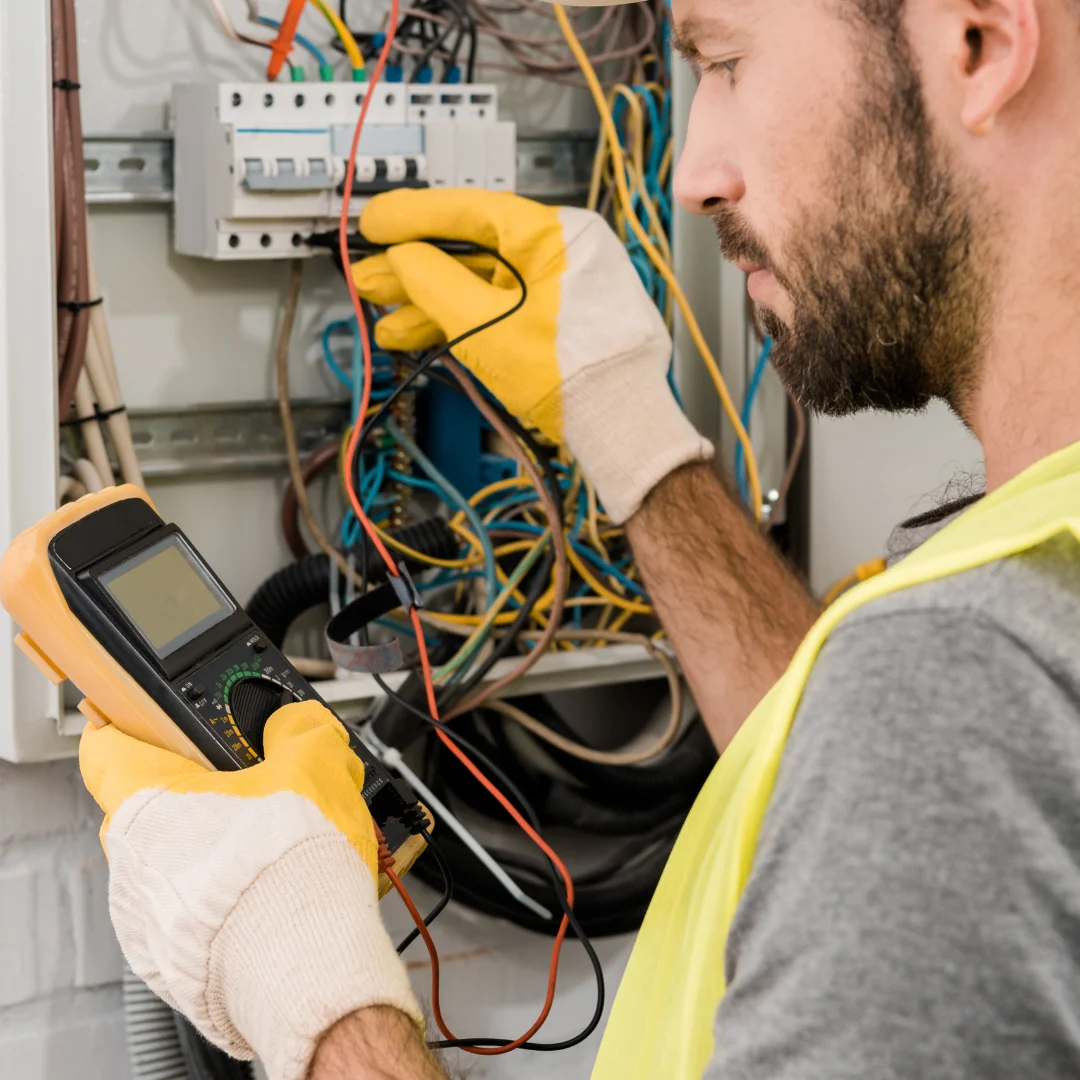
Licensed electrician testing an HVAC circuit with a digital multimeter at a residential panel
Homes built before 1980 were wired before central air conditioning was standard in the Front Range. The original electrical service often wasn't designed to carry the load of modern HVAC equipment. We find 60A panels trying to run a 200A house, 14 AWG wire on circuits that should be 10 AWG, and HVAC equipment that was added decades after the original wiring without anyone pulling a permit or upsizing the circuit. That's not a knock on the previous owners. It's just what happens over 40 years of updates without a licensed electrician doing the electrical repair side correctly. If your home was built before 1985 and you haven't had a licensed electrician verify your HVAC circuits, there's a reasonable chance something doesn't meet current code. We check it as part of any HVAC circuit job we take on. We're also happy to assess it independently if you want eyes on it before a problem develops. Learn more about our full electrical repair capabilities if related issues come up during the inspection.

What Homeowners Ask About Heating and AC Circuits

Not answered here? Call (720) 951-4619 and ask the electrician.

Can AC and furnace be on the same circuit?
No. Each system requires its own dedicated circuit. The NEC and virtually every equipment manufacturer's installation manual specify this. A furnace and a central AC unit running on one shared circuit will overload it, trip breakers, and in a worst case, overheat the wiring. If your current setup has them sharing a circuit, that's a code violation worth correcting before it becomes a hazard.
What breaker size does a central air conditioner need?
It depends on the equipment's minimum circuit ampacity, which is printed on the nameplate. Most residential central AC units require a 20A to 50A double-pole breaker. A 3-ton unit commonly uses a 30A to 40A breaker on a 10 AWG or 8 AWG circuit. Sizing it from a general rule without reading the nameplate is how you end up with a breaker that either trips constantly or doesn't trip when it should.
Why does my AC breaker keep tripping?
Three common causes: the breaker itself is aging and failing to hold its rated ampacity, the circuit is undersized for the actual load the equipment draws, or there's a fault in the wiring or at the disconnect. A fourth possibility is the compressor is drawing abnormally high amperage due to a mechanical issue. We can determine which it is with a load test at the panel and at the disconnect. Don't keep resetting a tripping breaker without finding out why.
Do I need a disconnect box for my outdoor AC unit?
Yes. The NEC requires a means of disconnect within sight of the outdoor condensing unit, and it must be readily accessible. This is separate from the breaker at the panel. The disconnect allows a technician to de-energize the unit safely during service without having to go back to the panel. If your outdoor unit doesn't have one, it's a code deficiency. We install them as part of any new circuit installation and can add them to existing setups.
How do I know if my HVAC circuit is the right size for new equipment?
Check the nameplate on the new equipment for the minimum circuit ampacity (MCA) and maximum overcurrent protective device (MOCP) rating. Then compare those to your existing wire gauge and breaker. If the existing circuit doesn't meet those numbers, it needs to be upgraded before the new equipment goes in. We verify this before any new HVAC installation. Getting it wrong means the system either won't perform correctly or the warranty is void. Every job is different, contact All Electric for an accurate estimate.
Can I add a heating and AC circuit to my existing panel, or do I need an upgrade?
It depends on how many open slots your panel has and whether the panel's total capacity can handle the additional load. Many older panels are already at or near capacity. We assess this before we quote the work. If your panel doesn't have room, a panel upgrade may be required before we can add the HVAC circuit. We won't wire a new circuit into an already-overloaded panel just to complete the job quickly.
Do I need a disconnect box next to my outdoor AC unit?
Yes. The NEC requires a readily accessible disconnect within sight of the outdoor condensing unit, separate from the panel breaker. It allows a technician to de-energize the unit safely during service. If your outdoor unit doesn't have one, it's a code deficiency. We install them on every new circuit and can add one to an existing installation.
How do I know if my existing circuit can handle new HVAC equipment?
Check the new equipment's nameplate for the minimum circuit ampacity (MCA) and maximum overcurrent protective device (MOCP) rating. Compare those to your existing wire gauge and breaker rating. If they don't match, the circuit needs upgrading before the new unit goes in. We verify this before any installation. Getting it wrong can void the equipment warranty and create a fire risk.
Can I add an HVAC circuit without upgrading my panel?
Sometimes. It depends on how many open slots your panel has and whether the total connected load leaves headroom for the additional circuit. Many older panels are already near capacity. We assess this before quoting. If the panel can't support the new circuit safely, we'll tell you upfront. We won't wire a new circuit into an overloaded panel to finish the job faster. Every job is different, contact All Electric for an accurate estimate.
What is a combination heating and air conditioning unit called?
A unit that handles both heating and cooling in a single package is called a packaged HVAC unit or a heat pump, depending on how it generates heat. Heat pumps extract heat from outdoor air for both heating and cooling. Packaged units typically combine a gas furnace and AC coil in one cabinet. Both still require a dedicated electrical circuit sized to the equipment's nameplate specifications.

What to Know

Key Facts About HVAC Circuit Work

These are the specifics that matter when hiring for heating and AC circuit work.

  • CO License #ME.0600978

    Electrical contractor licensed and qualified by master electrician

    Verify with the state
  • Fully insured

    Every circuit job is covered, yours and ours

  • 1-year labor warranty

    All circuit installations and repairs are backed in writing

  • 4.9 stars across 468 Google reviews

    Verified by real customers on the Front Range

    Read them on Google
Daniel VargasOwner · Family-owned · Denver Local

Schedule Your Heating or AC Circuit Service

Call the shop

(720) 951-4619
  • Mon to Fri: 5 AM to 9 PM
  • Sat and Sun: 7 AM to 8 PM