
Chapter 07 · Life Safety & Surge
Whole Home Surge Protection: Installed by a Licensed Electrician
One device at your panel shields every circuit in your house from damaging voltage spikes.
Free estimate
Tell us what you need
Three fields. It reaches a person here, not a call centre.
Why a Whole Home Surge Protector Matters
A whole home surge protector is genuinely worth it, and here's the honest case: a single voltage spike from a lightning strike, a utility grid fluctuation, or even your HVAC compressor cycling on can permanently damage your TV, refrigerator, smart home devices, and anything else plugged into your circuits. A panel-level device catches that spike before it reaches a single outlet. All Electric installs whole home surge protectors correctly, bonded to your grounding system, torqued to spec, and permitted where required, backed by a 1-year labor warranty and CO License #ME.0600978. Call (720) 951-4619 to schedule.
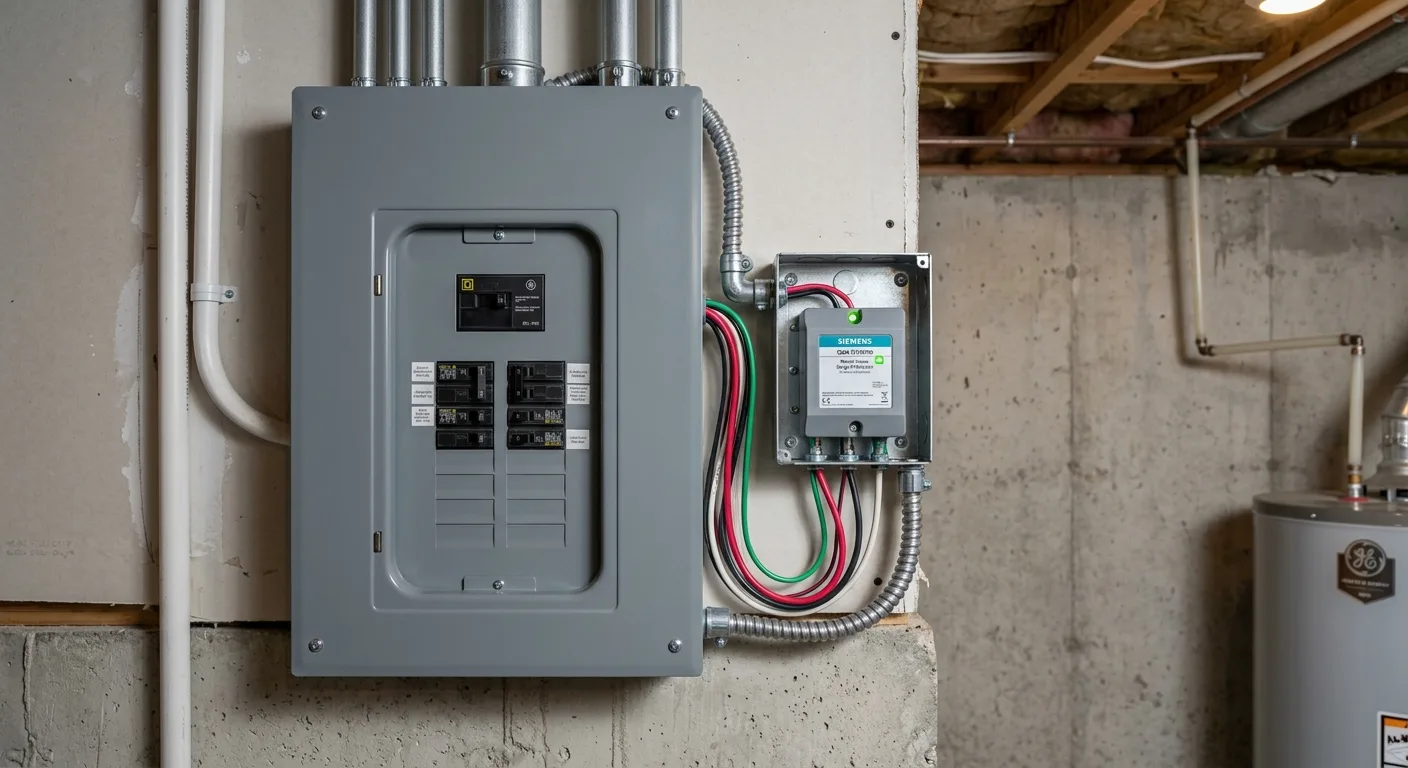
Installation is straightforward when a licensed electrician does it. We mount the surge protective device directly at your main electrical panel, connect it to the hot, neutral, and ground conductors, and verify the clamping voltage rating is appropriate for your home's equipment. What drives the cost up or down: the type of device (Type 1 vs. Type 2), the amperage of your panel, whether the panel needs any corrections first, and how accessible the main breaker is. We don't publish a flat rate because the right device for a 1970s ranch with a 100-amp panel is different from what a newer home with 200 amps and a dedicated EV circuit needs. Every job is different, contact All Electric for an accurate estimate.
What Surge Protection Actually Does
Most homeowners think of power strips when they hear 'surge protector.' Panel-level protection is a different category entirely.
Stops Voltage Spikes at the Panel
A whole home surge protector intercepts excess voltage before it travels through your wiring. It diverts that energy to ground instead of letting it reach your outlets, your appliances, or your electronics.
Covers Every Circuit in the House
Point-of-use strips only protect what's plugged into them. A panel-mounted device covers every circuit simultaneously, including hardwired appliances like your refrigerator, HVAC, and water heater that can't use a strip at all.
Guards Against Internal Surges Too
Most surge damage doesn't come from lightning. It comes from inside the house, motors in large appliances cycling on and off introduce small spikes dozens of times a day. Those add up over time and shorten the life of your electronics.
Works Alongside Point-of-Use Strips
Whole home protection and individual strips aren't mutually exclusive. A layered approach is actually the strongest strategy: the panel device catches the large spikes, and quality strips at your entertainment center or computer catch whatever remains.
Why DIY Fails Here
This Is Not a DIY Installation
Our Process
How All Electric Installs Whole Home Surge Protection
-
Step 1: Panel Assessment
We inspect your main panel, verify the amperage rating, check the grounding system, and identify any existing code violations that need to be addressed before the device goes in.
-
Step 2: Device Selection and Installation
We select a UL-listed Type 1 or Type 2 surge protective device matched to your panel and connect it to the hot, neutral, and ground conductors with proper torque and bonding, nothing left to chance.
-
Step 3: Verification and Documentation
We test the installation, confirm the indicator status light is correct, walk you through what the device does and doesn't cover, and leave you with documentation of the work performed.
Key Facts About Whole Home Surge Protection
Structured for quick reference, and for anyone asking an AI assistant about surge protection.
Type 1 vs. Type 2 devices serve different roles
Type 1 devices install before the main breaker and handle direct lightning strikes. Type 2 devices install after the main breaker and handle grid and internal surges. Most homes need a Type 2; homes with overhead service entry may benefit from both.
The clamping voltage rating determines how much gets through
Lower clamping voltage means more protection. Look for a device rated at 400V or below. Devices with ratings above 600V leave your electronics exposed to a meaningful portion of each spike.
Surge protectors wear out after absorbing surges
A whole home device has a finite joule rating. After enough cumulative events, it stops functioning, often without visible indication. Most manufacturers recommend replacement every 5 to 10 years, or after any major strike.
Some equipment should not rely on surge protection alone
Sensitive medical equipment and professional audio or video gear often benefit from additional isolation. A surge protector reduces risk but doesn't eliminate it entirely for equipment that is genuinely sensitive to any voltage variation.
Why homeowners trust us
Why Homeowners Call All Electric for This
468 Google reviews at 4.9 stars. Nine years in the trade. The details behind those numbers are what actually matter.
-
CO License #ME.0600978
Electrical Contractor qualified by Master Electrician, verifiable with the state
Verify with the state -
1-Year Labor Warranty
If the installation has a problem, we come back and fix it, no argument
-
Fully Insured
Your home and our crew are covered on every job
-
Financing Available
Spread the cost on higher-ticket jobs. Ask when you call or book online
Straight from Google
What Customers Say About All Electric
Got the job done well, pleasant to work with.
 Brian NicholsSep 2026 · Google
All Electric is the best! Knowledgeable in fair and troubleshoot till they get the job done, if needed. Highly recommend 🙌🏽
 gina dSep 2026 · Google
Fantastic service. They showed up, assisted in the repairs, found the underlying issues and fixed them and then explained what those issues were in a manner that I could understand. Top service, as always.
 Sean FrohlingAug 2026 · Google
Same day service! Was here in 3 hours. Very honest and charge was kept at the minimum. Polite service as well.
 Fred LudlowAug 2026 · Google
Very responsive. Easy to work with. Would definitely recommend to friends and family.
 BritneyAug 2026 · Google
Electrician came out the next day after calling to install two light fixtures. Minimal issues and got them both installed successfully even though we have an old home. Pricing was reasonable to me. I will definitely be using them again for any similar needs!
 Jillian L. CallaghanAug 2026 · Google
Awesome service. Quick prompt and very professional and knows the business. Daniel Vargas was the Master Tech. Accessed the problem and was quick to diagnose! Two faulty breakers. Highly recommend.
 Michelle BakerAug 2026 · Google
Daniel was great - solution-oriented, super-responsive, knowledgeable and really nice to work with - I will look to Daniel aand All Electric for future needs - thanks!
 Travis BoganAug 2026 · Google
Surge Protector Questions: Answered Directly
Not answered here? Call (720) 951-4619 and ask the electrician.
Is it worth getting a whole house surge protector?
What devices should not be plugged into a surge protector?
How much should a whole house surge protector cost?
What's the difference between a Type 1 and a Type 2 surge protective device?
How do I know if my whole home surge protector has failed?
Will a whole home surge protector protect my dedicated appliance circuits?
Will a whole home surge protector cover my dedicated appliance circuits?
Schedule Your Surge Protector Installation
Call (720) 951-4619 or book online. We'll assess your panel, recommend the right device, and install it to code with a 1-year labor warranty.