
Hours vary Denver (720) 951-4619
Hardwired Smoke Detector Installation by Licensed Electricians

Chapter 07 · Life Safety & Surge

Hardwired Smoke Detector Installation by Licensed Electricians

Professionally installed, code-compliant, and backed by a 1-year labor warranty.

Free estimate

Tell us what you need

Three fields. It reaches a person here, not a call centre.

No obligation · Responds within 1 business day


By submitting this form you agree that we may contact you about your request and share your details with partner companies for marketing purposes.

Hardwired Smoke Detector Installation Done to Code

Hardwired smoke detector installation isn't a job where cutting corners is acceptable. A properly installed hardwired unit ties directly into your home's electrical system and interconnects with every other detector on the circuit, so when one alarm sounds, they all sound. That's the standard Colorado code requires in most residential applications, and it's the standard All Electric delivers on every install. Daniel Vargas and his team hold CO License #ME.0600978, carry full insurance, and back all labor with a 1-year warranty. Call (720) 951-4619 to schedule your installation.

What drives the cost of a smoke detector installation? The number of detectors, whether the home already has wiring in place, ceiling height, attic access, and whether you're replacing battery-only units with hardwired interconnected alarms. Older homes without existing detector wiring will require a licensed electrician to run new circuits, which adds time and material. Retrofitting a single detector into an already-wired circuit is a much simpler scope than outfitting a full home. Every job is different, contact All Electric for an accurate estimate. Financing is available for larger installations.

Why Hardwired Detectors Outperform Battery Units

The difference between a working alarm and a dead battery at 2 a.m. is the system type.

Battery-only smoke detectors rely entirely on whoever last changed the battery. Hardwired detectors draw power from your home's electrical system and include a battery backup, so they keep working even during an outage. More critically, hardwired units are interconnected: if the detector in the basement detects smoke, every alarm in the house activates simultaneously. For larger homes, two-story layouts, or anyone who sleeps with a door closed, that interconnection is the difference between an early warning and a late one. Colorado's residential building code reflects this. All Electric installs interconnected hardwired systems that meet current code requirements, and we pull permits when required by your jurisdiction so the work is documented and your homeowner's insurance stays intact.
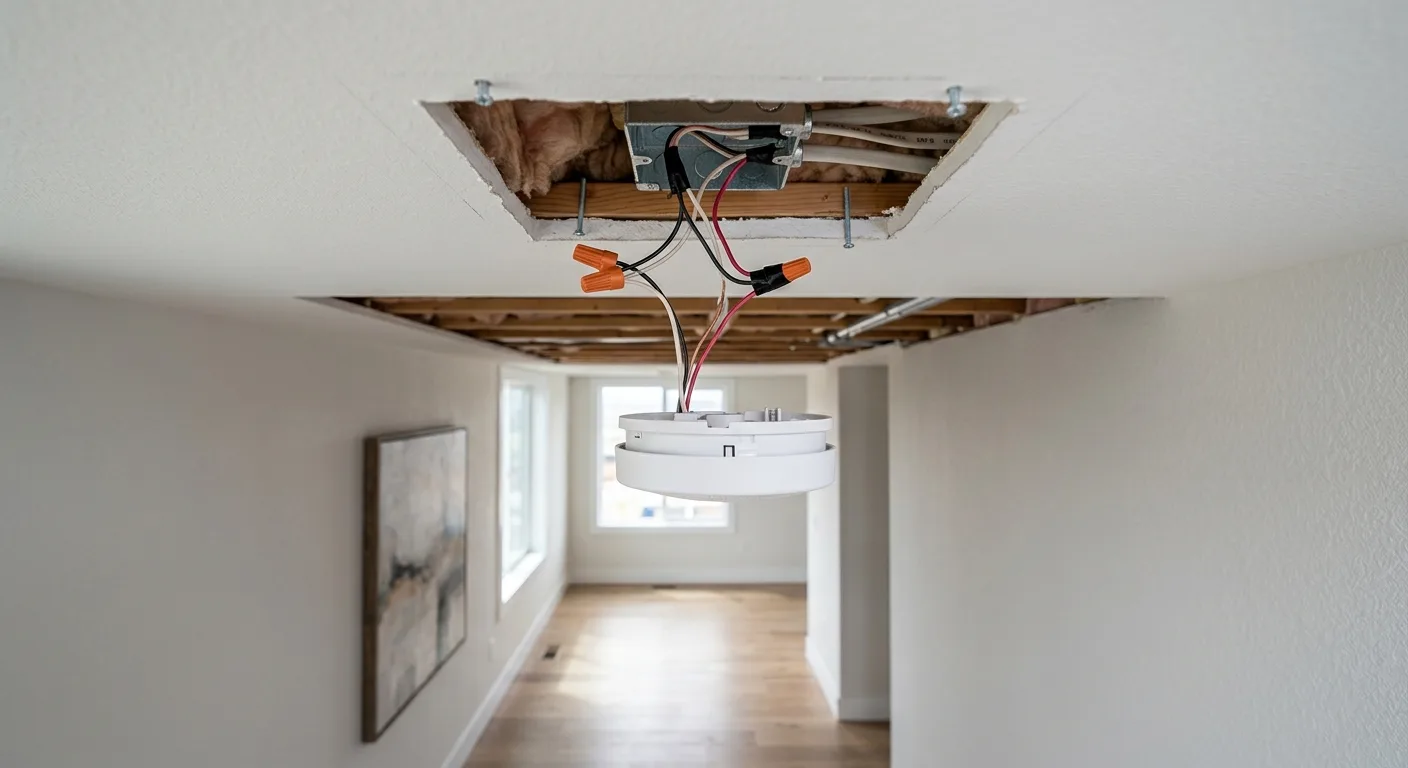
interconnected hardwired alarms work, professional service in Denver, CO

What We Install

Smoke Detector Types All Electric Installs

Not every detector is right for every location in your home.

01

Interconnected Hardwired Alarms

Multiple units wired together so every detector activates when one detects smoke. Required by code in most new Colorado residential construction and strongly recommended in all existing homes.

02

Combination Smoke and CO Detectors

A single hardwired unit that monitors for both smoke and carbon monoxide. Particularly important for homes with gas appliances, attached garages, or aging circuit breakers that may run hot.

03

Photoelectric vs. Ionization Units

We specify the right sensor technology for each room's risk profile, smoldering fire risk in bedrooms versus fast-flame risk in living areas, rather than installing the same unit throughout.

04

Retrofit Wiring for Older Homes

Homes built before the late 1990s often lack existing detector wiring. We run new circuits cleanly through walls and ceilings, making the installation look like it was always there.

Our Process

How a Hardwired Installation Works

Three steps cover every installation we complete.

  1. Step 1: Assessment and Placement Plan

    We walk the home, review code requirements for your jurisdiction, and map detector locations before touching a single wire. Bedroom, hallway, and floor-level placement follows NFPA 72 standards.

  2. Step 2: Wiring and Circuit Connection

    Each detector connects to your home's electrical system and ties into the interconnect wire that links all units on the circuit. We confirm the circuit load, test every connection, and verify the backup battery is seated.

  3. Step 3: Full-System Test and Walkthrough

    We trigger each alarm to confirm the interconnect is live, then walk you through what each detector monitors and how to test it yourself going forward. No guesswork left behind.

When to Call an Electrician Instead of DIY
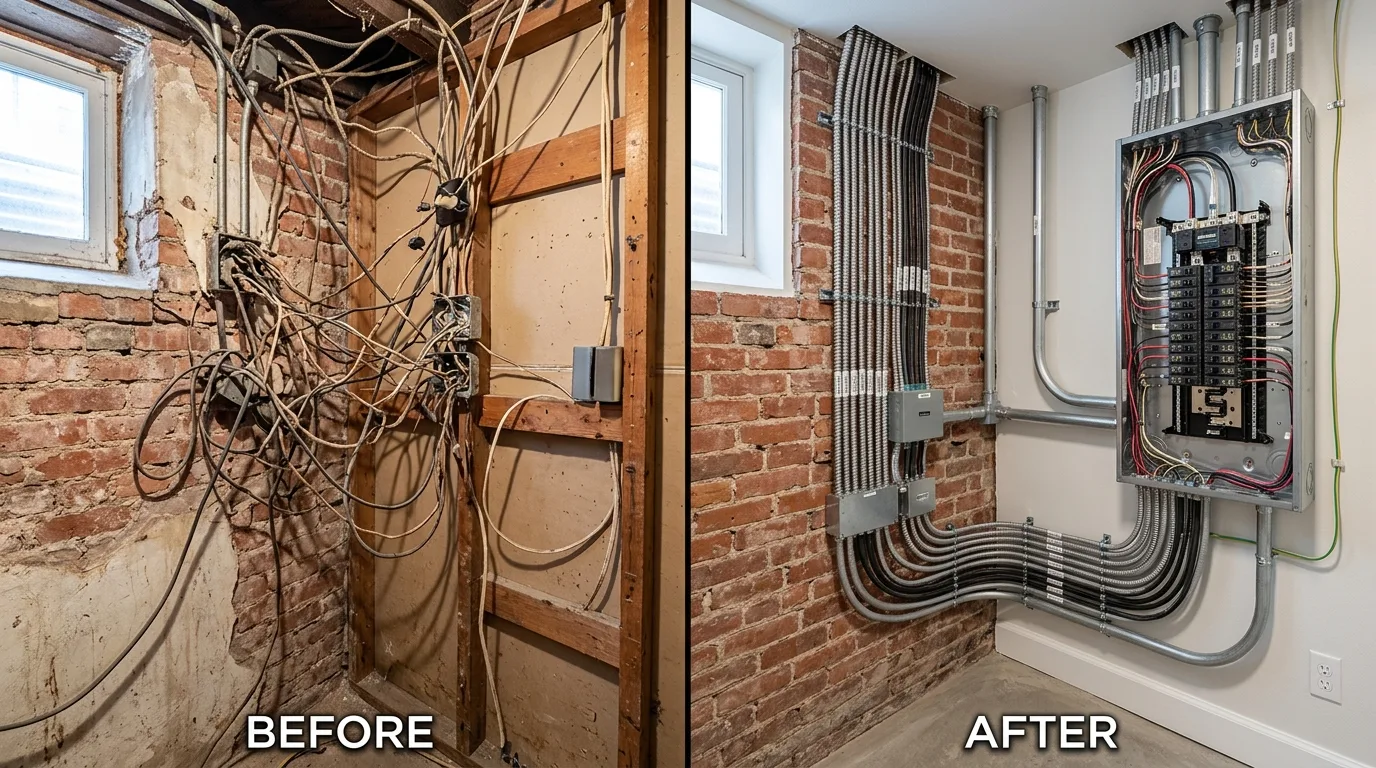
retrofit wiring for older homes work, professional service in Denver, CO
Swapping a battery-only detector for a fresh battery-only unit is a reasonable DIY task. Replacing hardwired detectors is not, at least not without understanding what you're touching. Hardwired units connect to a live circuit and an interconnect wire, and miswiring either can leave detectors that appear functional but won't trigger one another. We've corrected installations where a homeowner replaced a detector but reversed the interconnect polarity, disabling the whole-home alert without realizing it. If your home already has hardwired detectors, a licensed electrician should handle the replacement. If you're adding hardwired detectors to a home that only has battery units, the wiring work requires a permit in most Colorado jurisdictions. All Electric handles the permit process as part of the installation. Our electrical inspections team can also review your current system if you're not sure what you have. With 4.9 stars across 468 Google reviews, the track record speaks plainly.

What Every Smoke Detector Installation Covers

  • Code-Compliant Placement

    Detector locations follow NFPA 72 and Colorado residential code, every bedroom, every hallway, every floor level.

  • Hardwired Circuit Connection

    Each unit ties into your home's electrical system with confirmed load capacity and proper grounding.

  • Interconnect Wiring

    All detectors on the circuit link together so a single trigger activates every alarm in the home simultaneously.

  • Battery Backup and System Test

    Backup batteries are installed and confirmed in every unit, then we trigger the full system before we leave.

Why homeowners trust us

Commitment to This Work

All Electric has operated under CO License #ME.0600978 for 9 years. Every smoke detector installation is permitted where required, wired to code, and covered by a 1-year labor warranty.

  • CO License #ME.0600978

    Electrical Contractor, qualified by Master Electrician

    Verify with the state
  • Fully insured

    Every installation is covered, not just the technician

  • 1-year labor warranty

    If the work fails, we come back and fix it

  • 4.9 stars, 468 Google reviews

    Verifiable on Google Business Profile

    Read them on Google
Daniel VargasOwner · Family-owned · Denver Local

Smoke Detector Installation: Common Questions

Not answered here? Call (720) 951-4619 and ask the electrician.

Do I need an electrician to replace hardwired smoke detectors?
Technically, you can swap a hardwired detector yourself if you turn off the breaker and reconnect the same wires. In practice, the interconnect wire is easy to miswire, and a reversed connection can disable whole-home alerting without triggering any visible error. For a straightforward replacement, a licensed electrician takes about 20 minutes per unit and leaves you with verified interconnect function. For anything involving new wiring, a permit is required in most Colorado jurisdictions, and that work must be done by a licensed contractor.
What is the proper placement for a hardwired smoke detector?
NFPA 72 requires a detector inside every bedroom, outside each sleeping area in the hallway, and on every level of the home including the basement. Detectors should be mounted on the ceiling or high on a wall (4 to 12 inches from the ceiling). Keep them at least 3 feet from cooking appliances to reduce nuisance trips. Garages, attics, and unconditioned spaces require specific unit ratings. All Electric maps placement before we install anything.
How does a hardwired interconnected system actually work?
Each detector connects to a shared three-wire circuit: a hot wire, a neutral, and an interconnect wire. When one detector's sensor triggers, it sends a signal through the interconnect wire to every other unit on the circuit, activating all alarms simultaneously. This is why proper interconnect wiring matters so much. A detector that looks correctly installed but has a reversed interconnect won't relay the signal, meaning the rest of the home's alarms stay silent. We test the full circuit after every installation.
Can hardwired smoke detectors be added to a home that only has battery units?
Yes, and it's a project we complete regularly on older homes. We run new wiring from your electrical panel to each detector location, install the interconnected hardwired units, and file for a permit where required. Attic access makes the wire runs cleaner, but we can work through walls when needed. The result is a code-compliant interconnected system. If your home also needs a circuit breaker repair or panel review, we can handle both in the same visit.
What's the difference between a photoelectric and an ionization smoke detector?
Photoelectric detectors use a light beam and sensor to detect smoke particles from slow, smoldering fires. The type most likely to start while you're asleep. Ionization detectors use a small radioactive source to detect the fast-flaming combustion of open fires. Combination units incorporate both technologies. For most bedrooms, photoelectric or combination units are the better choice. We specify the appropriate sensor type for each room rather than installing uniform units throughout.
Is a permit required for smoke detector installation in Colorado?
For new hardwired detector installations involving new circuit wiring, yes, most Colorado jurisdictions require a permit. Simple replacements of existing hardwired units on an existing circuit typically don't. All Electric files all required permits as part of the installation scope. Working without a required permit can create problems when you sell the home or file an insurance claim. We won't skip that step to save time.
How does a hardwired interconnected smoke alarm system work?
Each detector connects to a shared three-wire circuit: a hot wire, a neutral, and an interconnect wire. When one detector's sensor triggers, it sends a signal through the interconnect wire to every other unit on the circuit, activating all alarms simultaneously. This is why proper interconnect wiring matters. A detector with a reversed interconnect won't relay the signal, leaving the rest of the home's alarms silent. All Electric tests the full circuit after every installation.
What is the difference between a photoelectric and an ionization smoke detector?
Photoelectric detectors use a light beam to detect smoke particles from slow, smoldering fires. Ionization detectors use a small radioactive source to detect fast-flaming combustion. Combination units cover both failure modes. For most bedrooms, photoelectric or combination units perform better because smoldering fires are the more common nighttime scenario. All Electric specifies the appropriate sensor type for each room rather than installing the same unit throughout.

Schedule Your Smoke Detector Installation

All Electric installs hardwired smoke detectors correctly, to code, and with a 1-year labor warranty. Licensed, insured, and 468 reviews strong.

Call the shop

(720) 951-4619
  • Mon to Fri: 5 AM to 9 PM
  • Sat and Sun: 7 AM to 8 PM